
Dental prosthetics
Dental prosthetics in Vilnius at SDC Clinic: crowns, bridges and removable dentures. At your consultation, we discuss a solution for your dental condition, the full treatment cost and eligibility for PSDF reimbursement. Kalvarijų g. 128A-2, daily 08:00–24:00.

What are dental prostheses?
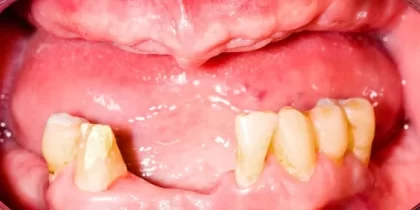
Dental prostheses are used to restore lost or severely damaged teeth. They help to restore both the functionality of the teeth (chewing and speaking functions) and the aesthetic appearance. Prosthetics can be performed when a patient loses one or several teeth due to various reasons, such as tooth decay, trauma, gum disease, or other health conditions. Tooth loss causes not only aesthetic changes but also problems related to gum health, jawbone resorption, and chewing difficulties, which may lead to digestive issues. Dental prostheses can also be adapted for the restoration of a full jaw. Modern technologies make it possible to create prostheses that look natural, are functional, and long-lasting, allowing patients to once again enjoy a full quality of life.

Cost of dental prosthetics
The cost of dental prosthetics can vary greatly depending on several factors. One of the main aspects determining the price of dental prosthetics is the type of prosthesis. Removable dental prostheses are usually cheaper than fixed ones, as their production and fitting require less work and fewer resources. Fixed prostheses, such as crowns and bridges, are more expensive due to the complexity of their manufacturing and installation process.
Removable prostheses are the cheapest option, but they often require more maintenance and may be less comfortable. Fixed prostheses, such as crowns and bridges, are more expensive but they are more reliable and convenient in the long term.
In addition, in some cases, additional procedures may be required before prosthetics, such as dental implantation or jawbone augmentation. These extra procedures can significantly increase the final cost but may be necessary to ensure the prosthesis is properly secured and lasts a long time. However, there are certain cases where you may receive compensation for dental prosthetics.
Dental prosthetics prices

Temporary crown
Pressed ceramic veneer (E-max)
Layered ceramic veneer

Dental treatment in installments
It is no secret that dental treatment, especially implantation or prosthetics, are quite expensive procedures. And a person does not always have sufficient funds, even though treatment is truly needed. So what should be done in this case? Postpone treatment for a later time and save enough money, or visit the dentist on time and pay for the procedures in installments?
Of course, it is always better to treat teeth immediately, without waiting for the problems to worsen or for lost teeth to damage the entire bite. Existing defects should be corrected as soon as possible. Therefore, if you delay your visit to the dentist only because of a limited budget – dental treatment in installments in Vilnius, at the SDC clinic, is truly an excellent solution. You will be able to pay for dental services over a suitable period of time and receive the necessary care on time without harming your finances.
How does dental prosthetics work?
The process of dental prosthetics consists of several stages that ensure the prosthesis is precisely adapted to the patient’s oral anatomy and needs.
Consultation and oral assessment
The first step of prosthetics is a consultation with a dentist, during which the condition of the mouth and teeth is assessed. The doctor performs a detailed examination and may take an X-ray or carry out other tests to determine which prosthetic solutions are the most suitable.
Tooth preparation
Depending on the type of prosthesis chosen, preparation may vary. If the patient is to have fixed prostheses, the tooth may need to be reshaped so that crowns can be attached. If prostheses are to be placed on implants, dental implantation must be performed first.
Prosthesis production
Once the type of prosthesis is selected, impressions are taken for production and the dentist sends them to a laboratory, where individually tailored prostheses are made. This is a very important stage, as the accuracy of the impressions determines the comfort and functionality of the prosthesis. The manufacturing process may take several weeks, depending on the type and complexity of the prosthesis.
Prosthesis fixation
When the prosthesis is ready, the patient returns to the dentist for final placement. If it is a fixed prosthesis, it is attached to the remaining teeth or implants. If it is a removable prosthesis, the dentist checks whether it fits properly and adjusts it to ensure maximum comfort for the patient.
When is dental prosthetics needed?
Dental prosthetics are required in various cases when natural teeth are severely damaged or missing.
Tooth loss
One of the main reasons for dental prosthetics is the loss of teeth due to various causes, such as trauma, tooth decay, or gum disease. Losing teeth can lead to problems such as difficulty chewing food or speaking. Prostheses help restore missing teeth and return lost function as well as a natural appearance.
Severe tooth damage
When teeth are damaged, crowns or bridges can be an appropriate solution. These prosthetic methods are applied when there are tooth fractures, wear, or when a large part of the tooth structure is affected by decay. Crowns strengthen and protect the remaining part of the tooth, thus preventing its loss.
Tooth wear or erosion
Over time, teeth may wear down due to age, improper bite, chewing strength, or acid exposure. When the tooth surface is severely damaged, prostheses (crowns or bridges) help restore the shape and function of teeth, protecting them from further wear.
Aesthetic prosthetics
Some patients choose dental prosthetics for aesthetic reasons. This is especially important when missing teeth are in the front dental arch. Modern prostheses look very natural, helping to restore not only tooth function but also a beautiful, aesthetic smile.

Types of dental prostheses
There are several types of dental prostheses that can be adapted to the patient’s needs, oral condition, as well as financial possibilities. Removable dentures are one of the most commonly chosen solutions when several or all teeth are missing. They are often used when the patient needs to restore the entire dental arch, but there are also partial dentures that replace only certain missing teeth. Complete removable dentures are used when a patient has lost all teeth in the jaw. These prostheses are fixed to the palate with special adhesives. Although full removable dentures are a cheaper solution, they can be less comfortable than fixed prostheses, as they may move slightly when chewing or speaking. Partial removable dentures are used when only part of the teeth are missing. These dentures have metal or plastic structures that attach to existing teeth, thus stabilizing the prosthesis in the mouth.
Fixed dental prostheses, on the other hand, are a long-term solution, as they are firmly attached to the remaining teeth or implants and are not removable. These prostheses provide greater comfort and stability compared to removable ones. They can be crowns, which are placed on the tooth to restore its shape, size, and functionality. Bridges are constructions designed to fill gaps between missing teeth. They are fixed to existing healthy teeth or implants and are a reliable solution when several adjacent teeth are missing.
Implant-supported prostheses are the most advanced and long-lasting solution, giving the patient a complete feeling of tooth restoration. Implants are small titanium screws inserted into the jawbone that successfully perform the function of a tooth root. After the implantation procedure, bridges or crowns can be attached to the implants. This method ensures strength, durability, and comfort.

Zirconium oxide crowns
Zirconium oxide has excellent biocompatibility with the human body, but known allergies should be discussed with your dentist before treatment.
Zirconium oxide is very strong and durable, and since it has no metal framework, it does not have the bluish tint typical of metal-ceramic prostheses. Teeth made of zirconium oxide look extremely natural, just like real human teeth.
Zirconium oxide crowns are used for the prosthetics of darkened or severely damaged teeth. The crown masks the tooth’s discoloration and effectively reduces the risk of fractures, making it a perfect solution for those who want to restore a healthy and natural-looking smile.
When teeth are restored with this material, they are minimally ground, which helps preserve the natural tooth structure as much as possible. A crown does not rule out gum inflammation or decay around its margins. An accurate fit, daily cleaning and regular dental check-ups remain important.

Metal-ceramic crowns
Metal-ceramic is the most common dental prosthetic method used to restore a single natural tooth, a dental bridge, or to attach a crown to an implant. A metal-ceramic crown consists of a metal framework covered with ceramic (porcelain). Metal-ceramic crowns are strong and durable, and their cost is relatively low, which is why they remain one of the most popular choices among patients.
The disadvantage of metal-ceramic crowns is aesthetics, as they are not light-transmitting, making the teeth appear darker, and a gray line may be visible near the gum margin. For this reason, metal-ceramic crowns are not recommended for the restoration of front, highly visible teeth.

Cast metal crown
A cast metal crown is one of the best options for molar tooth prosthetics, where durability is essential and the teeth are less visible. This type of crown is also perfectly suitable in cases where a bridge prosthesis needs to be fabricated.
One of the main disadvantages of this type of crown is poorer aesthetics compared to metal-free ceramics, however, it is more affordable.
Tooth prosthetics with removable constructions
Acrylic (plastic) dentures
Flexible (polyamide) dentures
Clasp-supported dentures

Full or partial acrylic denture
An acrylic (or plastic) denture is an individually manufactured removable dental prosthesis most commonly used for jaw prosthetics; however, partial removable dentures are also produced. Prostheses made of acrylic material restore chewing function only partially. Despite the fact that the denture provides the patient with a better aesthetic appearance compared to having no teeth and allows eating, removable acrylic dentures have disadvantages:
The denture is rigid, may crack or break, requires a longer adaptation period in the mouth, and may cause allergies.
Recovery of chewing function varies between patients.
The denture does not prevent jawbone resorption.

Full or partial flexible denture
A flexible dental denture is an individually manufactured removable dental prosthesis most commonly used for full jaw prosthetics; however, partial removable dentures are also produced. The main advantages of flexible dentures are comfort, a natural appearance, and a lower risk of fracture compared to conventional dental plates. Flexible dentures are softer, but comfort depends on their fit. Contact your dentist if the denture rubs or causes pain.
This dental plate does not have conventional metal clasps; they are replaced with high-quality plastic that perfectly adapts to the surrounding natural teeth and gums. Denture materials are selected individually, taking any previous allergic reactions into account. The flexible material is resistant to odor absorption and to the chemical effects of oral fluids.
It takes time to adapt to a removable denture. Its lifespan depends on care and changes in your mouth; adjustments may be needed.
The denture is usually manufactured over 4–5 visits with our clinic’s specialist. Only the highest-quality certified materials and state-of-the-art technologies are used in its production.
Our specialists working with dental prosthetics


Main disadvantages of a flexible denture
Recovery of chewing function varies between patients
The denture does not stop jawbone resorption
Dental prosthetics funded by the PSDF budget
SDC dental clinic cooperates with Territorial Health Insurance Funds. Therefore, at our clinic you can receive the highest-quality prosthetic services that are compensated from the Compulsory Health Insurance Fund. The following persons insured with compulsory health insurance are entitled to compensation for dental prosthetic services from the PSDF budget:
persons who have reached retirement age;
children up to 18 years of age;
people with disabilities who meet the current reimbursement criteria;
persons who have undergone treatment for oncological diseases of the oral cavity, face, and jaws.

Our news about dental prosthetics
News, tips, and expert opinions – read about everything on our blog
Frequently asked questions
What is dental prosthetics?
Dental prosthetics is a dental procedure during which missing or damaged teeth are restored in order to recover chewing function and improve the aesthetic appearance of the mouth.
In which cases is dental prosthetics necessary?
Dental prosthetics is recommended when a person loses one or more teeth due to cracking or fracture, as well as to strengthen weakened teeth or improve oral aesthetics.
What types of dental prosthetics are available?
The main types are fixed dental prostheses (crowns on natural teeth or implants, dental bridges) and removable prostheses (acrylic or flexible dentures, clasp-supported dentures).
How long does the dental prosthetics process take?
The process may take from several weeks to several months, depending on the complexity of the individual case and the chosen prosthetic method.
Is dental prosthetics a painful procedure?
The procedure is usually painless, as it is performed using local anesthesia. Comfort is ensured throughout the entire prosthetic treatment process.
How should prostheses be cared for after the procedure?
Fixed prostheses are cared for in the same way as natural teeth—by brushing with a toothbrush and toothpaste and using dental floss. Removable prostheses require slightly more attentive care: they must be cleaned regularly and stored in a special solution.
Do prostheses look like natural teeth?
Yes, modern dental prosthetic technologies make it possible to produce very natural-looking prostheses that meet the individual needs of the patient.
What is the cost of dental prosthetics?
The cost depends on many factors, including the prosthetic method, the type and amount of materials used, as well as the dental clinic and the specialist’s experience.
Can I eat everything with prostheses?
Yes, one of the goals of dental prosthetics is to restore full chewing function, allowing you to enjoy a variety of foods. However, during the first few days after the procedure, it may be recommended to avoid very hard or sticky foods.
Can dental prosthetics cause complications?
Like any other dental procedure, prosthetic treatment may involve certain risks; however, by following all the dentist’s recommendations and attending regular follow-up visits, most potential complications can be avoided.
Patient reviews
Our patients share their thoughts about their experience at the clinic
Egle J.
Arijelis J.
Gera klinika, visiškai neskaudėjo.
Rekomenduoju.
Arturas K.
Karolina S.
Ignas S.
Nuoširdžiai rekomenduoju Gyd. Mirandą Moničiūtę.
Švelni, girdinti, atsakinga, sąžininga!
Vertybės, kurias turėtų turėti kiekvienas gyd, deja. Džiaugiuosi pakliuvusi pas patikimą specialistę. Ačiū!
Vilnius
Daiva R.
Register for a free consultation
Registration by phone
Registration online
Working hours
I-VII 08:00-24:00
Address
Kalvarijų st. 128A-2, Vilnius
DENTAL PROSTHETICS PROCEDURES
Our works




Key advantages of dental prosthetics
One of the greatest advantages of dental prosthetics is the restoration of a beautiful smile. Prostheses—especially fixed ones or those made from high-quality materials—look natural and help patients feel more confident about their appearance. This is particularly important if the front teeth are missing, as they are visible when speaking or smiling.
In addition, tooth loss or severe damage can significantly affect chewing function. This can not only make eating difficult but also cause digestive problems. Prostheses restore chewing function, allowing patients to eat fully without discomfort or pain. Moreover, missing teeth can cause speech difficulties, as teeth are essential for proper sound formation. Therefore, prosthetics help restore proper speech function, enabling patients to communicate clearly and effortlessly.

Clasp-supported denture
A clasp-supported denture has a metal framework covered with plastic, into which plastic artificial teeth are set. It is a removable prosthesis that is attached to the teeth with clasps (special cast metal hooks). It is used when posterior teeth are missing on one or both sides of the upper or lower jaw.
It is a better and more comfortable prosthesis than a conventional plate, as chewing load is distributed evenly to the teeth and to the jawbone beneath the gum, resulting in slower jawbone resorption (atrophy). However, it is still a removable prosthesis and cannot restore chewing function by 100%.

Aesthetic prosthetics
Aesthetic prosthetics is most often performed in the area of the front teeth. If a tooth is damaged, metal-free ceramic crowns are usually placed. If the patient does not like the color or shape of the teeth and the tooth itself is healthy, metal-free ceramic veneers are most often bonded.
The E-Max prosthetic method helps achieve ideal precision, aesthetics, and resistance to external factors. This ceramic opens new possibilities for dental restoration. It is one of the best choices for prosthetics of front and individual teeth.
In our clinic, one of the most advanced types of metal-free ceramics is used for prosthetics — E-max, a high-quality lithium disilicate material. This type of ceramic is four times stronger than conventional ceramic used for metal-ceramic crown fabrication.
One of the main advantages of E-max prosthetics is that the damaged tooth structure is ideally restored. Teeth that have undergone root canal treatment usually become significantly weakened and fragile. E-max technology offers excellent aesthetics and durability when restoring such teeth. Teeth broken due to various injuries or large cavities can be perfectly restored using E-max crowns. These crowns are translucent, therefore they look natural and do not differ from natural teeth.
The shade of the bonded crown or veneer is selected to match your natural tooth color, making the crown or veneer identical to natural teeth.
Faster appointment booking
The entire visit planning process – from registration to follow-up – in just a few simple steps
Registration
Register in the clinic’s self-service system and provide all required information
Appointment time selection
After registering, choose the most suitable visit time for you
Clinic visit
During the visit, the dentist will provide a consultation, prepare a treatment plan, and perform the necessary services
Report
In our clinic’s self-service system, you will always be able to see all reservation and visit reports
Register for a consultation
We invite you to a consultation during which our doctors will answer all your questions and prescribe the necessary treatment for you.
